
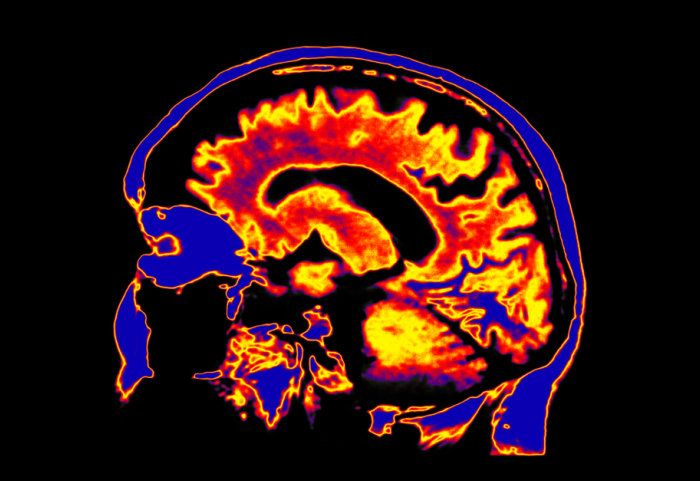
The short answer: brain imaging shows three changes during hypnosis. Activity drops in the brain’s alarm system, so attention becomes more focused. The part of the brain that directs and organises connects more strongly with the part that senses the body. And the inner voice that keeps telling us who we are becomes quieter. Together, these changes explain why hypnosis feels so absorbing, so embodied and so open to change.
One of the reasons hypnosis can feel so different from ordinary thinking is that the brain is not simply “relaxing”. During hypnosis, the brain reorganises the way attention, body awareness and self-reflection work together — and that reorganisation is what makes hypnotherapy such a powerful tool for change. If you are new to the subject, it may help to read what hypnotherapy is first.
I have practised hypnotherapy in London since 2010. In this article I explain what the research shows, network by network, what it means in the therapy room, and where the science still has limits.
Three brain changes during hypnosis at a glance
Salience network
Less alarm
Activity falls in the dorsal anterior cingulate cortex, so fewer things compete for your attention.
Executive control network
More body
The prefrontal cortex connects more strongly with the insula, which senses breath, emotion and sensation.
Default mode network
Less self-talk
The prefrontal cortex and the posterior cingulate cortex fall out of step, so self-conscious narration quietens.
What the Stanford brain scan study found
The clearest picture so far comes from a 2017 study in Cerebral Cortex by Heidi Jiang, David Spiegel and colleagues at Stanford University. They screened 545 healthy adults and selected 57 who were either very highly or very low in hypnotisability. Each person then lay in an fMRI scanner during four conditions: rest, recalling a memory, and two different hypnosis experiences guided by recorded instructions.
The researchers looked at three brain networks: the salience network, the executive control network and the default mode network. In the highly hypnotisable group, hypnosis changed all three, as described below.
1. The brain’s alarm system quietens down
One of the first things that appears to happen in hypnosis is a lowering of activity in a part of the brain called the anterior cingulate cortex. This area is involved in what neuroscientists call the salience network — the system that helps us notice what feels important, urgent, threatening or demanding of our attention.
You could think of it as part of the brain’s alarm-and-orientation system. A loud noise happens, something unexpected moves in the corner of your eye, someone looks at you in a certain way, and your attention is pulled towards it. Something in you says: pay attention, this might matter.
In hypnosis, activity in this system quietens down. This is significant, because it allows attention to become much more focused. The mind becomes less scattered by every external cue, every small worry, every background noise, every ordinary demand of self-consciousness. Something can move into the background, so that something else can become more vivid, more available, more absorbing.
This is also why hypnosis can help with anxiety and stress, where the alarm system is stuck on high alert.
2. A stronger connection with the body
At the same time, hypnosis appears to strengthen the connection between the prefrontal cortex — the part of the brain involved in executive control, direction and organisation — and the insula.
The insula is a small but very important area of the brain involved in sensing the internal state of the body. It helps us register breath, tension, sensation, emotion, discomfort, ease, movement and visceral feeling. It is one of the places where mind and body speak to each other.
So in hypnosis, you are not becoming less embodied. Quite the opposite. You become more connected to the body, more able to feel the body from the inside, more able to let imagination, emotion and sensation communicate with each other.
This is one of the reasons hypnotherapy can be so powerful therapeutically. It is not just talking about change. It is not just thinking about change. It allows an idea, an image, a memory or a possibility to be experienced through the body.
3. The “me” network becomes less dominant
Then there is another important shift during hypnosis.
The connection between the executive control network and the posterior cingulate cortex — an area associated with the default mode network — changes. The default mode network is highly active when we are thinking about ourselves: who we are, what we should be doing, what other people think of us, what kind of person we are, what kind of person we are not allowed to be.
It is the network of self-reference. The “me” network. The part of us that keeps narrating identity.
In hypnosis, this ordinary self-referencing becomes quieter. Not absent, not erased, but less dominant.
And that matters enormously. Because so much of our suffering is held in the assumptions we keep repeating about ourselves:
I am anxious. I am not creative. I cannot speak in public. I am bad at relationships. I am not the kind of person who can change. I have always been like this.
In an ordinary state of consciousness, these statements can feel like facts. They can feel like the architecture of the self.
Trying out a different self-experience
In hypnosis, because the usual self-monitoring and self-defining systems are softened, you can begin to try out another possibility. Not as an abstract positive thought. Not as an affirmation stuck on top of fear. But as an actual, lived experience.
For a little while, you can experience what it might feel like to be less afraid. More spacious. More creative. More able to speak. More able to move. More able to choose. These are powerful experiences to have, especially if you have denied them to yourself until that very point.
This is what makes hypnotherapy such an interesting therapeutic space. It brings together focused attention, absorption, a temporary loosening of habitual self-consciousness, a stronger connection with the body, and a greater flexibility in the way we imagine ourselves.
The kind of imagining we are talking about here is not the same as the imagining you do in an ordinary waking state. Research suggests that what the mind experiences in hypnosis can register in the brain much as a “real” experience does. Hypnosis allows us to live internally something that the brain and body treat as close to what we live in everyday reality.
A well-known example is a 2000 study in the American Journal of Psychiatry. Eight highly hypnotisable people were scanned while looking at patterns. When they were hypnotised and asked to see a grey pattern in colour, the colour areas on both sides of the brain became active, as if they were really seeing colour. When asked to see a coloured pattern as grey, activity in those areas went down.
What happens to pain in the brain during hypnosis?
The same principle applies to pain. In a 1997 study published in Science, researchers in Montreal used hypnotic suggestions to change how unpleasant a painful stimulus felt, without changing how intense it was. Brain scans showed that activity in the anterior cingulate cortex rose and fell with the unpleasantness, while the area that registers the raw sensation stayed the same.
In other words, hypnosis can change how much pain bothers you, not only whether you notice it. You can read what the clinical trials show about pain in the benefits of hypnotherapy.
From suggestibility to cognitive flexibility
What used to be called “suggestibility” is perhaps better understood as cognitive flexibility. The old word carries too much baggage, as if hypnosis makes you weak, passive, gullible or open to manipulation. That is not the interesting part of hypnosis at all.
Research supports this view. In a 2021 study in Scientific Reports, Afik Faerman and David Spiegel tested 72 adults and found that more hypnotisable people were less likely to persevere, that is, to keep applying an old rule after it had stopped working. Hypnotisability appears to share a mechanism with the ability to let go of a fixed pattern.
The interesting part is that hypnosis allows you to try on a new pattern of experience — a new way of feeling, of perceiving yourself, of inhabiting your body.
And because it is experienced rather than merely discussed, the possibility becomes more real. Hypnotherapy opens a door onto a different story and a new set of experiences that become immediately logged in your body and your mind, filling up new reference points and new perimeters of what is possible.
What the science cannot tell us yet
Brain research on hypnosis is still young, and it is worth being honest about its limits:
- Many studies are small, often between eight and a few dozen people.
- They usually compare the most and least hypnotisable people, so most of us sit somewhere in between.
- A 2017 review of the brain imaging research by Mathieu Landry, Michael Lifshitz and Amir Raz found that few patterns repeat reliably across studies. The most consistent was activity in the lingual gyrus, an area involved in mental imagery.
- Scans show what happens during hypnosis, not how lasting change happens over weeks of therapy.
None of this makes the findings less interesting. It means they describe the mechanism in broad strokes, and that what happens for you will depend on you, your goals and the way you work with your therapist.
What this means for hypnotherapy
That does not mean every change happens instantly. But it does mean that hypnosis creates the conditions in which change becomes more available, more imaginable, more embodied — and therefore more possible. You can read what this means in practice, condition by condition, in the benefits of hypnotherapy.
In my sessions, I use this state to help people rehearse a different response: calm instead of panic, ease instead of tension, a voice instead of silence. If you would like to know more about the process, read how hypnotherapy works and how many sessions you may need. I see clients at my practice in London and online.
This is a short and simplified account of a much richer neuroscience framework, developed through the work of Dr David Spiegel and his team at Stanford University, whose research has been central in showing how hypnosis changes patterns of attention, body awareness and self-experience.
Frequently asked questions
What happens in the brain during hypnosis?
Brain scans show three main changes. Activity drops in the dorsal anterior cingulate cortex, part of the salience network that flags what seems urgent, so attention becomes more focused. The prefrontal cortex connects more strongly with the insula, which senses the inside of the body. And the link between the prefrontal cortex and the default mode network weakens, so self-conscious thinking about who you are becomes quieter.
Is hypnosis the same as sleep?
No. Despite the name, which comes from the Greek word for sleep, hypnosis is a state of focused, absorbed attention. In brain imaging studies, people in hypnosis are awake and engaged, and they usually remember the session afterwards. It can feel deeply relaxing, but you are not unconscious.
Which parts of the brain are affected by hypnosis?
The Stanford study by Jiang and colleagues found changes in three networks: the dorsal anterior cingulate cortex in the salience network, the dorsolateral prefrontal cortex in the executive control network and its link with the insula, and the posterior cingulate cortex in the default mode network. Other studies show hypnotic suggestions can also change activity in areas for pain, colour and mental imagery.
Are you in control during hypnosis?
Yes. The executive control network, the part of the brain that directs and organises, stays engaged and becomes more closely connected to the body. What softens is the background monitoring and self-commentary. You remain aware of what is happening and can open your eyes and end the session whenever you choose.
Can everyone be hypnotised?
People differ in how responsive they are to hypnosis, and this is a fairly stable trait, a little like a talent for music. Most people respond to some degree. Brain studies often compare the most and least responsive: the Stanford team screened 545 people to find 57 at either end of the scale. In therapy, a good hypnotherapist adapts the approach to how you respond.
Does hypnosis change the brain permanently?
The brain scans measure what happens during the hypnotic state, not lasting changes to the brain. What tends to last is the experience itself: feeling calm in a situation that used to frighten you, or speaking freely where you used to freeze, gives the mind a new reference point that can be practised and strengthened over several sessions.
Is hypnosis the same as meditation?
They overlap, as both involve focused attention and a quieter inner commentary. The difference is direction. Meditation usually trains open, non-judging awareness, while hypnosis uses that absorbed state with a purpose, guided by suggestions and imagery towards a specific change, such as feeling calmer before a presentation or sleeping better.